


11.08.2026
Two thousand years ago, a Roman empress drank wine from a hill near the Adriatic Sea every day. She said that wine kept her healthy. Today, on that same hill, the world’s best-selling sparkling wine is produced. Between those two moments lies a long story about a name that was almost lost, a legal battle that decided who is allowed to use it, and an invention that changed everything.
First, there was a name: : Roma, Pucinum
It is the 1st century AD. Pliny the Elder, one of the most important Roman authors, is writing a comprehensive encyclopaedia on nature, *Naturalis Historia*. In a chapter on wines, he notes something unusual: Empress Livia Drusilla, wife of Augustus, the first emperor of Rome, every day drank a wine called Pucinum, produced on a rocky hill near the Adriatic Gulf, close to Mount Timavus. Livia believed that this wine was the reason she lived to the age of 86, an almost unbelievable for that time, when life expectancy was much lower.
The physician Galen, several generations later, continued to tell about of the therapeutic properties of this wine. So, it was not merely a passing fad at the imperial court. Pucinum wine has maintained its reputation for centuries .
The place Pliny was referring to is, today, almost certainly, the area around the city of Trieste, where the Glera grape – the variety used to make modern Prosecco – is still grown. We cannot be certain of every detail – it is a story dating back two thousand years – but the geographical continuity is hard to ignore: the same hill, the same exposure to the sea, the same grape variety.

A name that had almost disappeared, but was rediscovered
After Ancient Rome, there follows a long silence. Not because wine had disappeared, but simply because no one wrote about it clearly enough for the information to reach us. Hundreds of years pass without any reliable records.
It was not until 1593 that an English traveller named Fynes Moryson travelled through Italy and recorded, for the first time in writing, the word that truly interests us: no longer ‘Pucinum’, but ‘Prosecco’. He wrote exactly as follows: ‘Here grows the wine Pucinum, now called Prosecho, much praised by Pliny’. This was the moment when the old Roman name officially gave way to the modern one.
The story does not end there. In 1754, the poet Aureliano Arcanti wrote of a ‘meloaromatic Prosecco’ in a poem, proof that the name was already widespread and was not merely an isolated discovery by a single traveller. In the 18th century, the cultivation of the Glera grape spread further and further across the hills of Veneto and Friuli, and in 1772, Francesco Maria Malvolti was the first to formally link the name Prosecco to the Conegliano-Valdobbiadene area, the heart of today’s production.
The invention that changed the meaning of the word ‘Prosecco’
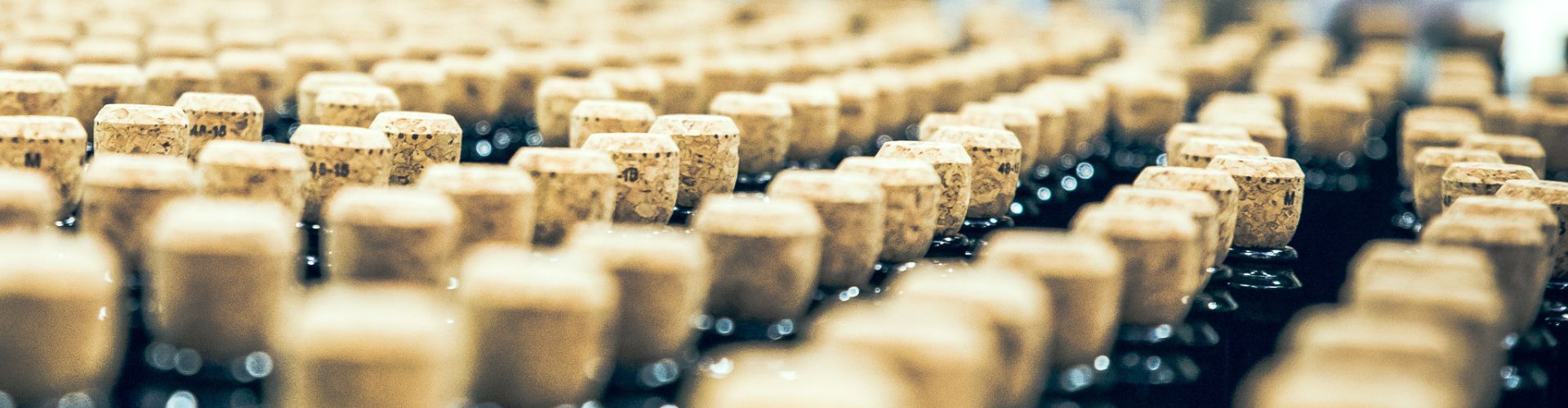
Until the second half of the 19th century, Prosecco was, in essence, a still or slightly sparkling wine, produced and drunk locally. What transformed it into something completely different was a technical invention, and it is a story of two men who, without knowing each other, solved the same problem.
Federico Martinotti, director of a research institute in Asti, patented the idea in 1895 of a second fermentation carried out not in the bottle, but in a large, pressurised vessel. A few years later, in 1907, the French engineer Eugène Charmat perfected the method and designed the stainless-steel tanks that would become the industry standard. To this day, the method is known by both names: the Martinotti-Charmat method, also known as the Italian method or the autoclave method.
The difference from champagne is simple to explain, but has a significant impact on the flavour: with champagne, the second fermentation takes place individually, in each bottle – it is a slow process, lasting months or years, and it gives the wine those aromas of bread, yeast and dried fruit. With Prosecco, the second fermentation takes place in a single large, pressurised tank – a much faster process, designed specifically to preserve the freshness of the Glera grape’s floral and fruity aromas, rather than masking them with notes of ageing.
The production area was not officially demarcated until the 1930s, and in 1969, the first Denomination of Controlled Origin (DOC) was introduced for the Conegliano-Valdobbiadene area. It is important to note that DOC and DOCG are not synonymous. DOCG, the Denomination of Controlled and Guaranteed Origin, introduced in 2009 for the historic core of Conegliano-Valdobbiadene and Asolo, entails stricter production rules, lower yields per hectare, and additional quality control. In practice, a Prosecco DOCG always comes from the historic heart of the region, whilst a Prosecco DOC may come from a much wider area, which today covers nine provinces in Veneto and Friuli Venezia Giulia.
From one hill, across the entire globe
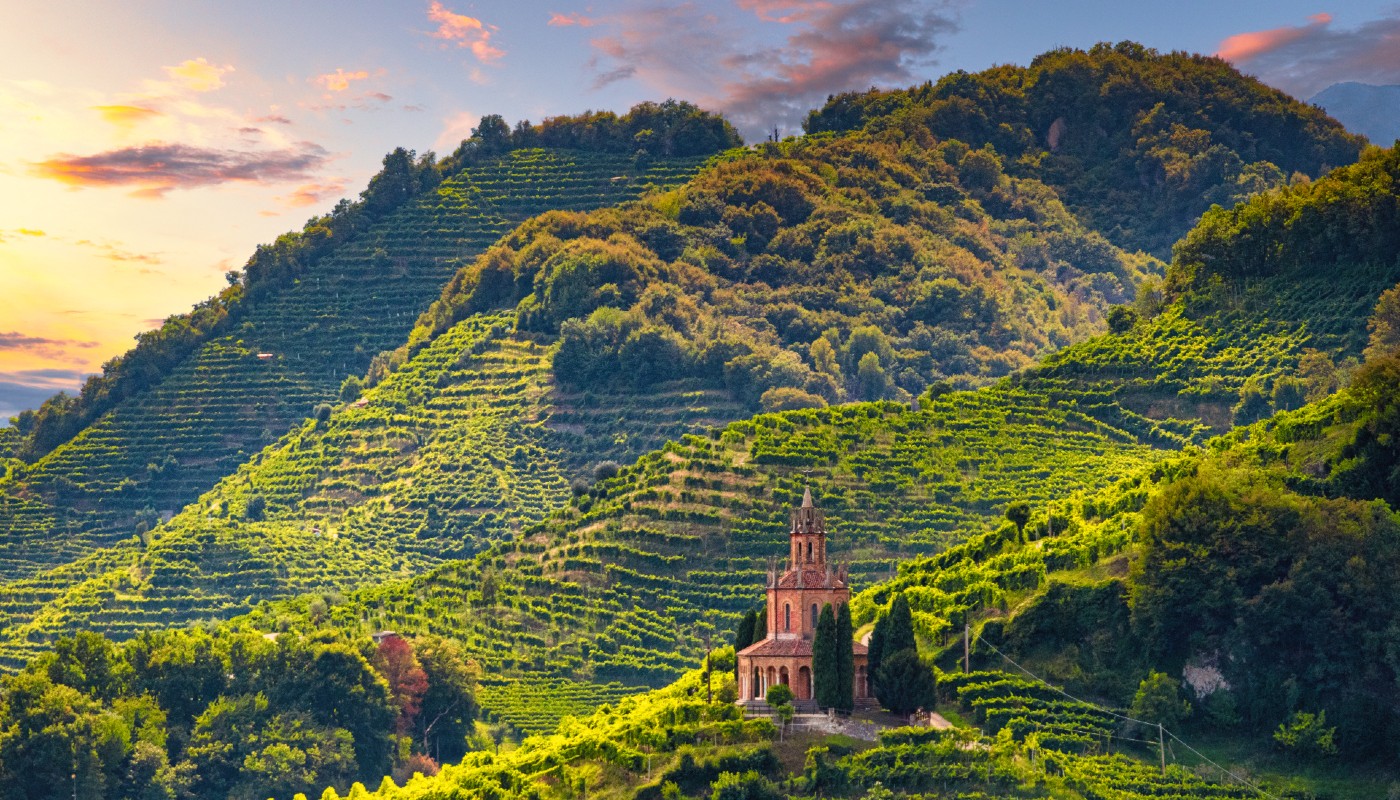
Prosecco’s surge in popularity stems not from a single decision, but from a number of factors that came together at just the right time.
In the 1980s, Italian producers began exporting on a large scale, and the wine’s light character and freshness immediately appealed to foreign consumers. In the early 2000s, Prosecco made a strong entry into the North American and British markets, aided by a broader cultural trend: the popularity of the Aperol Spritz cocktail, a price much more affordable than that of champagne, and a climate in which people were increasingly seeking festive yet unpretentious alternatives.
But the most interesting part of the story is a legal one.. Until 2009, Prosecco was, officially, the name of a grape variety, not that of a protected region. This meant that, in theory, anyone, anywhere in the world, could plant this variety and call the resulting wine Prosecco. European regulations, however, do not allow the name of a grape variety to also become the name of a protected designation of origin. The solution found by Italian producers was both simple and ingenious: they renamed the grape Glera, thereby freeing up the name Prosecco so that it could become a protected geographical indication, just like Champagne for the French. The protected area then expanded far beyond the historic heartland of Conegliano-Valdobbiadene, and the result was the consolidation of a single story, a single name, a single region, easily recognisable anywhere in the world.
Today, Prosecco is sold in over 160 countries and has overtaken Champagne in terms of global sales volume. But beyond the figures, the story has remained the same for two thousand years: someone, somewhere, on that same hill near the Adriatic, makes a wine that others cannot stop drinking, and then spends generations arguing over what to call it.

From Livia to the shelves of now
This story is more than just history – you can see it in the bottle too. On Alcomarket shelves, you’ll find this two-thousand-year journey condensed: from affordable, everyday Prosecco DOC to a DOCG from the historic heart of Conegliano-Valdobbiadene, from the classic Extra Dry style to Brut or a Millesimato with a declared vintage. Discover the full range of Prosecco in Alcomarket shops and online.
